Yule – Returning to the Light

As the nights grow longer as we head through Winter, we once more reach that time of year of the longest night - Yule, otherwise known as the Winter Solstice. For thousands of years this turning point - when darkness reaches its peak and the Sun starts to return – has been honoured. In ancient Celtic lands, Yule was not a single day but a season – that liminal threshold, a pause between what has been and what will come. The earth is at her stillest, the natural world resting beneath the hard and frost covered land, ready to stir into life once more.
In our modern world – full of noise, urgency and screens calling for our attention – the gifts of Yule are more vital than ever. It invites us to slow down, to breath, to reconnect with ourselves, and to remember even in our darkest moments the light is always on its way back. In a season where society tells us we should be getting ready to head out partying every night in celebration of the festive season, Yule stands tall and reminds us to slow down and reminds us we can just stay home and nest if we want to.
The Heart of the Solstice: The Rebirth of the Sun
At an astronomical level, Yule marks the point when the sun stands still in the sky and we have the longest night. He then starts his slow climb back to longer days. The ancient Celts celebrated this moment as a triumph of renewal. Fires were lit to honour the reborn sun, homes were decorated with evergreens to call in vitality, and communities gathered to share warmth, stories and food during the coldest part of the year.
While modern society tends to charge full speed into December with shopping lists and obligations, the deeper rhythm of the season has not changed. Beneath the commercial frenzy, the season still whispers the same message it always has – rest, reflect, rekindle your inner flame.
There is a power in bringing ourselves in alignment with this natural cycle – because when we are in tune with the earth’s turning, we also honour our own.
Darkness as a sacred teacher
As with Samhain, Yule sits in the dark half of the year. But where Samhain teaches us to honour our Ancestors, Yule holds that still point just before the sun starts to return, a pause before new beginnings. It is a pause between breaths, the silence before the dawn.
Our ancestors understood that darkness is not something to be feared, but as a moment of space to dream and rest. Seeds are germinating under the ground; animals retreat into hibernation. Even the sun appears to withdraw. In this moment of stillness, we are offered a powerful invitation:
What needs rest within us?
What needs to be released so we can begin again?
Where is your own inner light waiting to return?
Modern life doesn’t give us much time to sit with questions like these. Yet the Solstice has always been a moment of introspection. As we turn inward, we discover the treasures that can only be found in darkness – clarity, renewal and the soft truth of our own inner voice.
Yule as the antidote to an overwhelming December
One of the greatest paradoxes of our modern life is that during the darkest, quietest, most inward time of year our lives have become the busiest. December is filled with invitations to parties, work socials, school events, shopping trip, family gatherings and expectations piled upon expectations.
It is the season where we are told – both subtly and loudly – to be endlessly cheerful, productive, sociable and available.
But the earth is doing the opposite.
Winter calls for rest.
The woodland creatures are resting.
The seeds are resting.
The trees are conserving their energy.
The very sun itself appears to stall in the sky.
Yule teaches us that we are not designed to move at full speed all year long. When the modern world tells us party season is here, the Solstice invites us to soften, retreat and listen to the inward voice. This is not a rejection of the joy or the fun – but a reminder that joy is deepest and most sustainable when it rises slowly, like the returning light.
Incorporating that Yule wisdom into our modern lives could look like:
Choosing fewer but more meaningful gatherings.
Allowing yourself quiet evenings when others are out late.
Saying “no” without giving a reason.
Trading frantic shopping trips for homemade and heartfelt gifts.
Creating a ritual of stillness on Solstice night – candlelight instead of bright light, reflection instead of rush.
We are not separate from the earth’s rhythms. When we allow ourselves to slow down in Winter, we align with a rhythm that is ancient, healing and profoundly human.

The Evergreens: Symbols of life in deepest Winter
Evergreen plants – holly, ivy, pine and fir – were sacred to our ancestors in the UK and remain powerful symbols at Yule. While the world lies sleeping, these stay vibrant and green, reminding us that life continues even in the winter’s darkness.
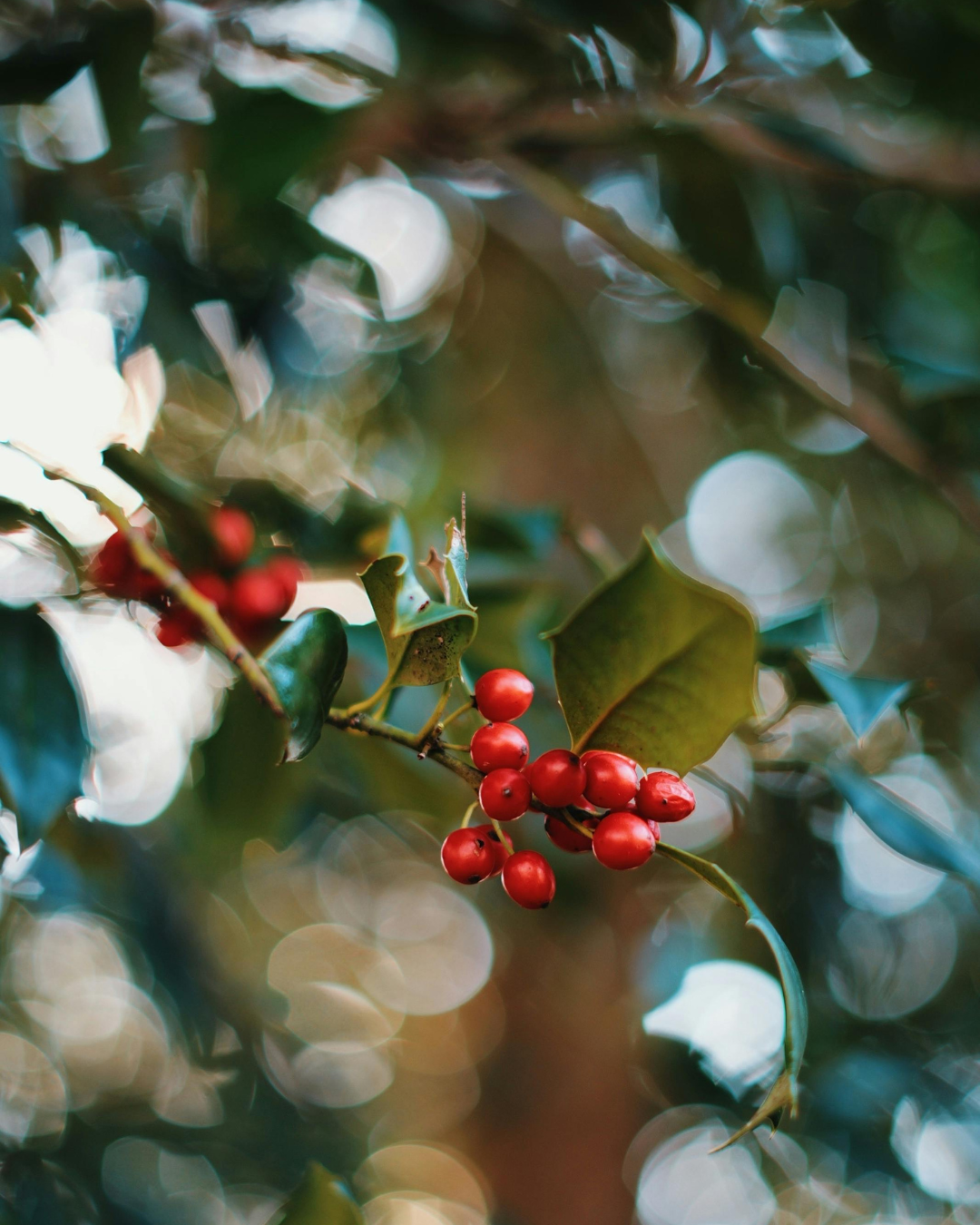
Holly with its bright red berries was seen as a protector and guardian of hope.
Ivy, winding and resilient, symbolised persistence and the binding together of community.
Pine and Fir carried the energy of purification, vision and strong foundations.
Bringing evergreens into the home was never just decorative, it was a blessing and a celebration of virality. Even today, whether we decorate a tree, hang a wreath or place a sprig of holly on a windowsill, we continue an ancient tradition of calling life back into the world.
The Yule Log and the Hearth Fire
One of the oldest Solstice customs is the lighting of the Yule log – a single log chosen with intention, often carved with symbols of protection and wrapped with herbs. It burned through the longest night of the year to honour the rebirth of the sun.
In modern times, most of us don’t have open hearths or whole logs to burn, but the symbolism remains powerful. Candles on the altar, fairy lights around the home or a small fire pit under the night sky all echo the same purple – to tend to the flame within ourselves and our community.
A simple candle lit with intention can hold the same magic as any ancient blaze.
Yule in a modern world – creating space for meaning
Amidst the holiday overwhelm, it can be easy to lose the heart of the season. But Yule invites us to carve out moments of stillness, connection and meaning. Here are a few suggestions of ways to honour the solstice in this modern world:
Create a Solstice altar – it might hold evergreens, a candle, a small bowl of salt or symbols that remind you of renewal or the inner light.
Spend time in the darkness and the light – Turn off the lights for a while on Solstice night. Sit in the quiet, then light a candle to welcome the Sun’s return.
Reflect on the years lessons – What have you learned? What wisdom might you be carrying forward?
Set intentions, not resolutions – Don’t set a harsh demand for change, instead, plant seeds of intentions that you can nurture through the year.
Returning to the heart of the season
In our modern world, reconnecting with Yule helps us to reclaim a sense of rhythm, belonging and sacredness. It grounds us in something older and wiser than any hustle or holiday marketing can. It invites us to sit with the land, with our ancestors, with our own souls. And it reminds us that even in our darkest chapters, the light is always waiting to return.
Yule is not simply a date on the calendar – it is the returning of the light.
As the wheel of the year turns and the first rays of the new sun emerge, let you own inner flame rekindle.